
Share Hanna du Plessis's obituary with others.
Invite friends and family to read the obituary and add memories.
Stay updated
We'll notify you when service details or new memories are added.
You're now following this obituary
We'll email you when there are updates.
Select your format and elements to print
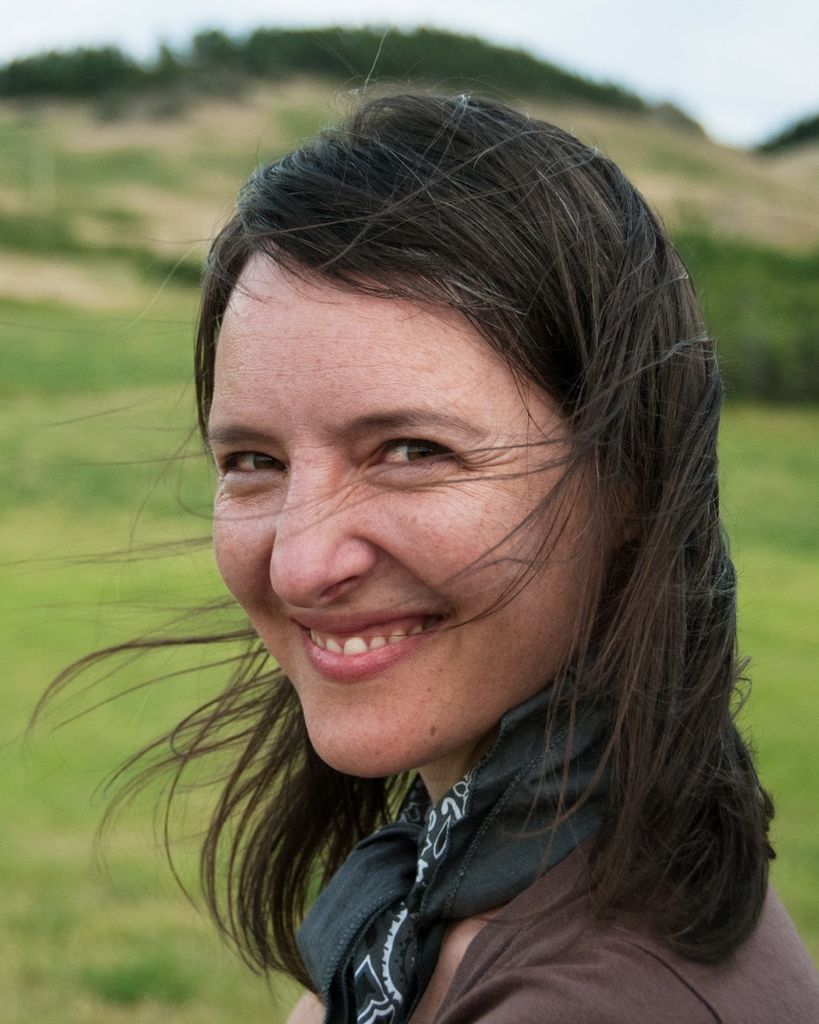
Hanna du Plessis
January 17, 1977 — February 1, 2026
Polish Hill
Share Hanna du Plessis's obituary with others.
Invite friends and family to read the obituary and add memories.
Stay updated
We'll notify you when service details or new memories are added.
You're now following this obituary
We'll email you when there are updates.
Select your format and elements to print


"I'm a lover of life. I rub myself on life like a cat against your leg."
That's how Hanna du Plessis described herself. She died on Sunday, February 1, 2026 in Pittsburgh, Pennsylvania, surrounded by beloved community. She was 49 years old. In the three years between her diagnosis and death, she completed two books, enrolled in an MFA program in creative writing, and held the center of a remarkable, caring community.
Even while dying, Hanna insisted on her full aliveness. As an artist, she worked with salvaged fabric, iridescent watercolor, and cardboard. And she performed, through dance, improvisation, acting, singing in choirs, and telling stories on stage. She was, in her own words, "woven into community—a partner and the spare mom to two teens."
She was also "a survivor, a seeker, an outsider, immigrant, recovering workaholic, perfectionist, control freak, oppressor, white settler." Through her work as facilitator, professor, and writer, she held space for collective reckoning, healing, and world-building.
This was characteristic of Hanna: facing what others turn away from, finding beauty in what breaks us, insisting on stubborn gladness even in the furnace of suffering.
FINDING HER QUESTION
Hanna was born in Bellville, Western Cape, South Africa, as a white Afrikaner. "Internationally, we are known as the architects of apartheid," she wrote. "But that is just one chapter of my people's history." Her great-great-grandfather came to South Africa as a refugee escaping religious persecution. Her parents' grandmothers were held in concentration camps under British occupation. "I say this because it helps me locate myself in cycles of inter-generational harm," she explained. Understanding and interrupting those cycles became her life's work.
She was named Johanna Hendrika du Plessis after her grandmother, though she went by “Hannah,” then “Hanna”—each spelling a small act of reclaiming herself. At eighteen, she dropped the diminutive "Hannatjie" (little Hanna). At forty-five, she changed the spelling to "Hanna," the Afrikaans form, refusing the spelling her great-grandmother adopted to appease the British colonizers.
She studied interior architecture, working across two continents. Her work included built projects in South Africa, teaching positions in Mexico and Chicago, and co-founding her own design firm. She believed good design could create economic opportunity and equity. Eventually, she faced a harder question: What if the real work wasn't designing spaces, but transforming the patterns that shape how we see and treat each other?
BECOMING A SEEKER
"Thirteen years ago, I hit a wall," Hanna said. "I knew I had to stop running and walk into the furnace of loss, but I had no idea how." She had grown up in a culture that avoided grief, that said "forgive and forget," and told her not to be so sensitive and emotional.
In 2009, after her marriage ended and she immigrated to the United States, she began a new journey of identity, “seeking anything that tasted like truth, healing, and liberation, from any spiritual or practical tradition." She changed careers, becoming a facilitator and learning to hold space for deep pain to surface and be met with unconditional acceptance.
She joined collaborators in turning their work toward what they called "social pattern-shifting"—helping individuals, groups, and organizations work with complexity, oppression, trauma, and the conditions for belonging.
TEACHING TRANSFORMATION
In 2012, Hanna became founding faculty of the MFA in Design for Social Innovation at the School of Visual Arts. For fourteen years, she co-taught the Fundamentals course, guiding over 250 students through questions like: How are the patterns of culture and community entangled with my own habits of being? How do we nurture the conditions for everyone’s belonging? How do we face limiting beliefs, fear, and unhealed trauma? How do we practice becoming the change we seek, together?
"The future, the better future that each of us longs for, is not some dream in the sky," she told TEDx Pittsburgh audiences in 2017. "It's an unwritten script. And each of our lives is a line in that script."
Students consistently describe her teaching as transformative. She created brave space for facing difficulty. She practiced rigorous kindness. She modeled what it looks like to keep showing up with full honesty and a generous heart.
Beyond the classroom, Hanna facilitated culture-shifting work, particularly around racial healing and organizational transformation. She hosted extended engagements—sometimes eighteen months or more—giving participants time to work through internalized patterns, practice new ways of relating, and build capacity for transformative leadership.
She specialized in working with white people on questions of racial justice, helping them examine their role in systems of harm without getting stuck in shame or defensiveness. "Looking back at history—the rough, painful history, not the sanitized story—is what has built in me the strength and conviction to work towards a world of belonging for all," she testified at a Pittsburgh school board hearing.
MAKING AND GRIEVING
Hanna made things. She drew and painted, worked with salvaged fabric and cardboard. She danced, improvised, acted, sang in choirs, told stories on stage. Making was how she processed what couldn't be spoken. "Years of doing improv taught me there are no mistakes," she said, "just more material to make with."
In 2021 she had a miscarriage, and processed her grief through writing. "Grief has a way of scratching you open," she wrote. "You think you grieve one thing and then realize you are grieving everything." That model—listening inward and expressing outward—is at the heart of Hanna’s life and teaching. It is how she helped people touch the deep stuff we'd rather avoid, but that yearns to change.
STUBBORN GLADNESS
In November 2022, Hanna's speech began to slur. By March of 2023, she had a diagnosis: bulbar-onset ALS, the fastest-progressing form. Her neurologist told her she had two to five years to live, probably closer to two.
"I am forty-five," she wrote. "I have my life ahead of me. I am coming into my own as an artist. I have work that I love, which pays enough for me to indulge in pleasure. I can take a week-long textile printing workshop, indigo dye over my eager hands. I can disappear into Utah slot canyons with my new and gorgeous family, and I no longer feel like an immigrant outsider. I participate in a vibrant community. I crave living, performing, publishing, collaborating, exhibiting, traveling, teaching, nesting, seeing the kids through school, caring for my people and my aging parents. My family lives till they are toothless. I cannot be dying, not when I am only starting to live."
Hanna's initial question was, "Is life with ALS worth living?" But she found her way to a different question, returning to a quote from Ram Dass: "Healing does not mean going back to the way things were before, but rather allowing what is now to move us closer to God." She said, "What a crushing invitation, to allow my loss of all I love to become an offering to Life itself."
She gathered her people and made a request: "I don't want a circle of care that centers on me. I want to participate in a community of mutual care." A close group began what they called Careforce, which eventually involved nearly thirty people. Together they learned how to care for Hanna while also caring for each other and themselves. Over months and years they struggled through ever-changing demands of caregiving, tangled healthcare systems, personal and relational difficulties, and the relentless demands of 24/7 attentiveness. They struggled, persisted, and delighted. Hanna described her time in this community as “the most alive I have ever felt.”
She adopted a phrase from Jack Gilbert's poem "A Brief for the Defense": Stubborn gladness. Stubborn joy.
As ALS paralyzed her limbs, Hanna continued to create. She completed her first book, Bedsores and Bliss. She continued writing gratitude essays. She traveled to Ireland for a graduate writing residency, communicating by writing on an erasable board. She enrolled in Carlow University's MFA program on full scholarship, attending intensives in a wheelchair, using a ventilator, with caregivers supporting her.
She grieved in community, never alone. When she could no longer lift her arms to draw, she painted pictures with words. When she could no longer speak, she used a gaze-tracking device and a synthesized voice. She lit candles with her partner Seth, voicing fears and turning them into prayers. When she could no longer swim to release her rage, her therapist watched for cars while Hanna wailed into the woods near her home.
"Grief is trustworthy," she came to believe, "and we are resilient."
"I feel sad that I am dying so young, and with so many dreams unrealized," she wrote in the afterword to her film Choosing to See. "Wherever you are, I trust you, sacred being, to look and see. Look and see. Look until you see what possibility beckons you forward. And follow it wholeheartedly. I'll be rooting for you from the other side."
THE INVITATION
Hanna leaves behind both her beloved birth family and an extensive chosen family. Her parents Elsa and Eben in Pretoria, South Africa. Siblings Otto and Lilla, and many aunts, uncles, cousins, and lifelong friends. In Pittsburgh, her partner Seth Payne and his children Otto and Early. Her creative partner Marc Rettig, and soul-friends Ti Wilhelm and Erika Johnson, all carers to the end. Around the world: countless students, colleagues and co-creators, a vast international network of friends, and a community that learned from her how to embrace all that life brings, light and shadow.
She leaves several books in various stages of completion—Bedsores and Bliss: Finding Fullness of Life With a Terminal Diagnosis, Good Girl (personal essays spanning her life), The Grief and Gratitude Essays, Oppression and Sue, Practicing a New Way of Being in the World, and a short film called Choosing to See: Racial Healing is Possible. These works are in stewardship for future development and publication.
More than any single work, Hanna leaves an invitation. To not "look away to be okay." To face limiting beliefs, fears, and unhealed trauma. To practice being together across difference. To create brave space where people can be honest about difficulty while trusting that transformation is possible. To remember that we are the world, that personal and systemic change are entangled, that healing ourselves is essential to collective healing.
As she wrote in her final published essay: "Practice noticing when we feign faux acceptance, and instead choose to face the hurt. Practice allowing ourselves all the space to rage and hate, but not get stuck there. Practice holding each other in great care when we feel hopeless and would rather opt out. Practice bringing the devastation into community where we can co-create new rituals and new ways of caring for each other."
And in her blessing to those who grieve: "I wish for you a sacred circle around your grief. One that protects you from anything that rushes in to falsely cheer you up, tempt you to minimize the magnitude of your loss, or hurry you into acceptance. Grief is part of life and you were made to live. May everything you long for—be it tools, teachers, chocolate or solitude—find you and walk you home to genuine belonging."
Hanna lived what she taught: that we can meet life's blows without closing down, that stubborn gladness is possible even in dying, that a world of belonging is worth working toward even when we won't live to see it bloom.
Service
Everyone is invited to a graveside service at Penn Forest Natural Burial Park, 121 Colorado Street, Verona PA 15147, on Wednesday, February 4th at 3 pm. Please carpool if at all possible and park in the main cemetery parking lot. We will process to the gravesite from there. You are invited to wear clothing and footwear, such as snow boots, that are most comfortable for the frigid weather and a walk through the woods. We will not have access to indoor space, but we will have a few folding chairs available for the service. Hanna asked for folks to consider bringing “...a soft natural object that will become part of a layer between the soil and the board I rest on.”
In lieu of flowers, honor Hanna by doing the difficult thing: have the conversation you've been avoiding, embrace your old wounds and serve them tea, engage with the relationship that needs repair, open the door you're afraid to open and find the invitation beyond. Turn to meet it. She'll be rooting for you from the other side.
We welcome donations to support the development and publication of Hanna’s writing: hannaduplessis.com/donate
People who have been touched by Hanna’s life are invited to add their comments to her message board: hannaduplessis.com/messageboard
Service Schedule
Past Services
Graveside Service
Wednesday, February 4, 2026
Starts at 3:00 pm (Eastern time)
Penn Forest Natural Burial Park
Guestbook
Visits: 892
This site is protected by reCAPTCHA and the
Google Privacy Policy and Terms of Service apply.
Service map data © OpenStreetMap contributors